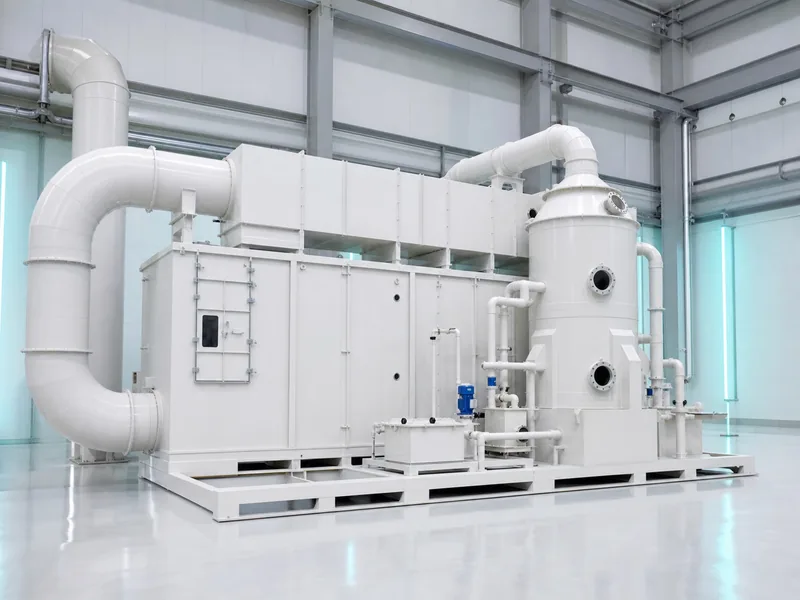
Carbon + Catalytic Desorption (CO)
Batch-regenerating carbon beds with catalytic burner — the cost-effective standard for intermittent coating and printing lines.
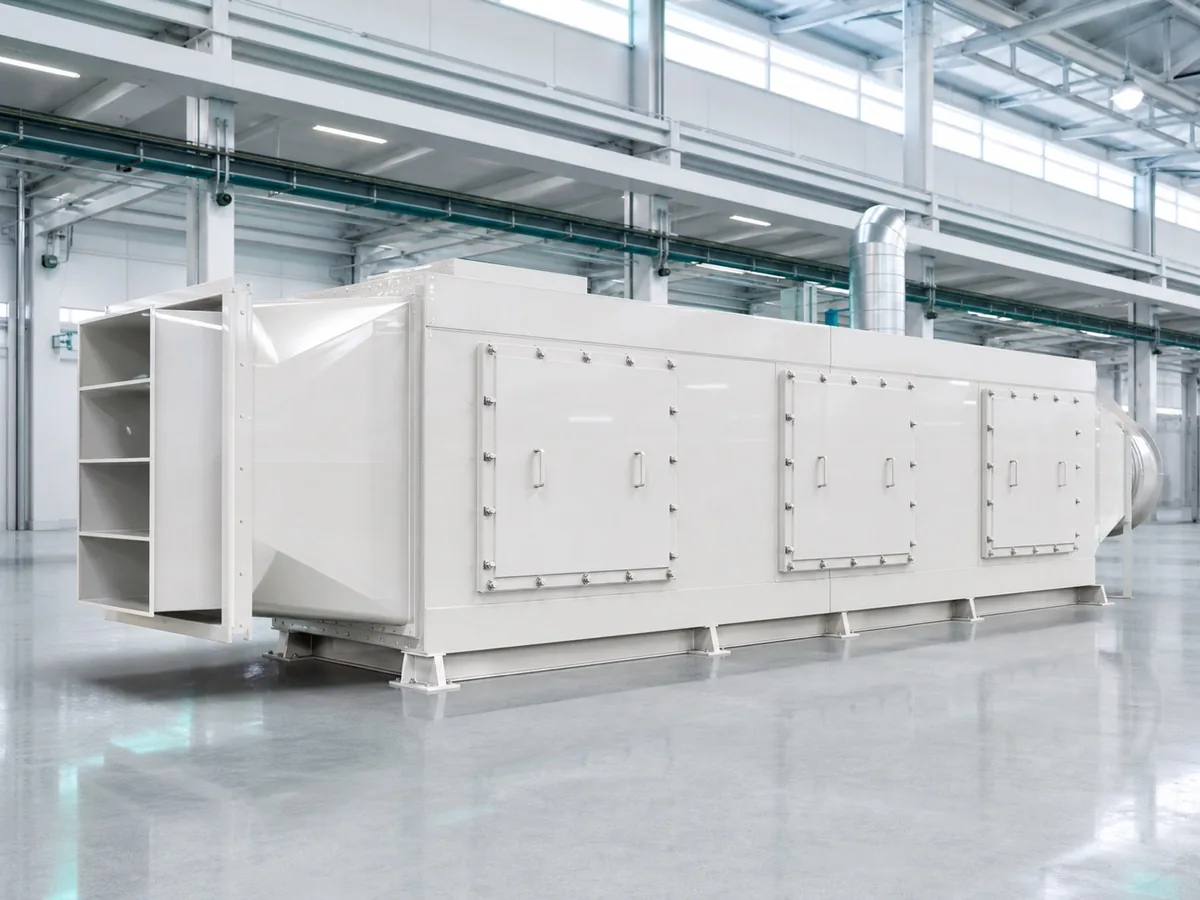
For organic exhaust that carbon change-outs can't economically handle, JHF builds destruction-based trains: activated carbon or zeolite concentration upstream, catalytic oxidation downstream. Big, dilute airflows become a small, rich stream that burns cleanly over catalyst at ~300–400 °C — with heat recovered to keep running costs low.
We fabricate the adsorption housings, PP pre-treatment and duct in our own workshop, integrate burners, catalyst and controls, and commission with your team remotely or on site.
| Airflow range | 2,000 – 100,000 m³/h (rotor systems at the high end) |
| Suitable VOCs | Toluene, xylene, benzene series, esters, ketones, alcohols — mixed solvent exhaust from coating, printing, chemical and electronics plants |
| Destruction efficiency | Typically 95–99% VOC destruction across the concentration + oxidation train at design load; verified against your local discharge standard |
| Concentration stage | Activated carbon beds with hot-air desorption cycles, or continuously rotating zeolite wheel (concentration ratio 10–25×) |
| Oxidation stage | Catalytic combustion at ~300–400 °C over noble-metal honeycomb catalyst; electric or gas start-up heating; autothermal above ~1 g/m³ concentrated stream |
| Heat recovery | Plate or shell heat exchanger preheating desorption/inlet air |
| Safety chain | LEL monitoring option, dilution interlocks, temperature limits, flame arrestors, emergency bypass to stack |
| Pre-treatment | PP scrubber / dry filter box for humidity, dust and paint mist — fabricated in-house |
| Controls | PLC + HMI touch panel, English interface, remote diagnostics via 4G/Ethernet |
Every proposal includes a process flow diagram, mass balance and operating-cost estimate for your utility prices.
Batch-regenerating carbon beds with catalytic burner — the cost-effective standard for intermittent coating and printing lines.
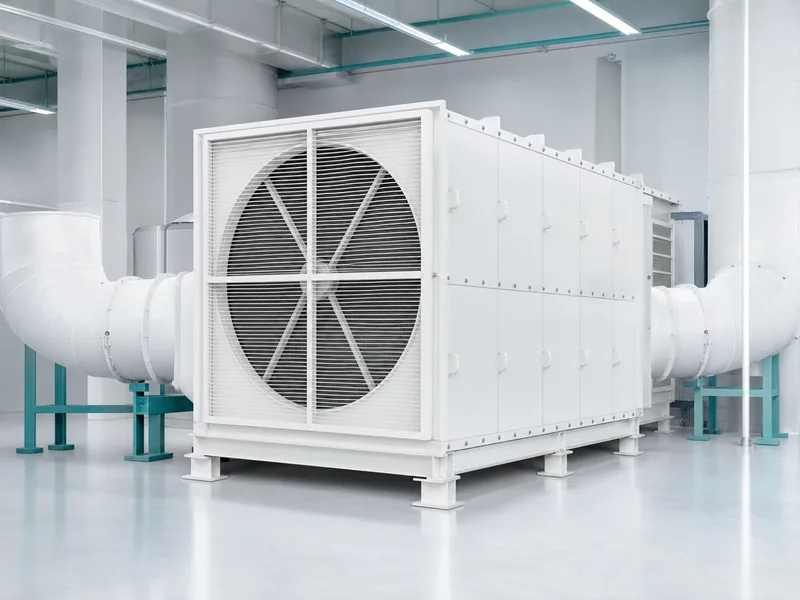
Continuous 24/7 lines with big airflow and low concentration — rotor concentrates 10–25× into a small oxidizer.
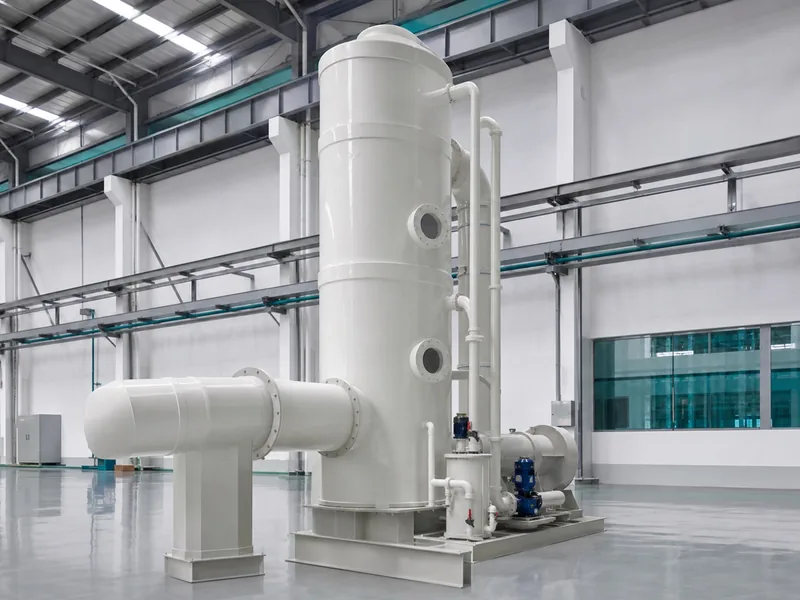
PP quench and scrubbing towers, dry filter boxes and demisters protecting any oxidizer — ours or one you already own.
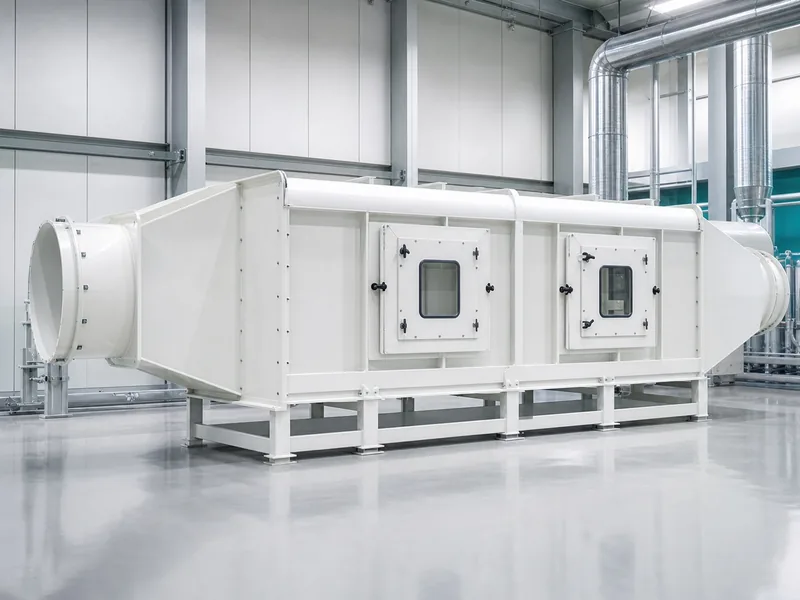
Compact inline units for odor and light organic duty at restaurants, plants and pump stations.
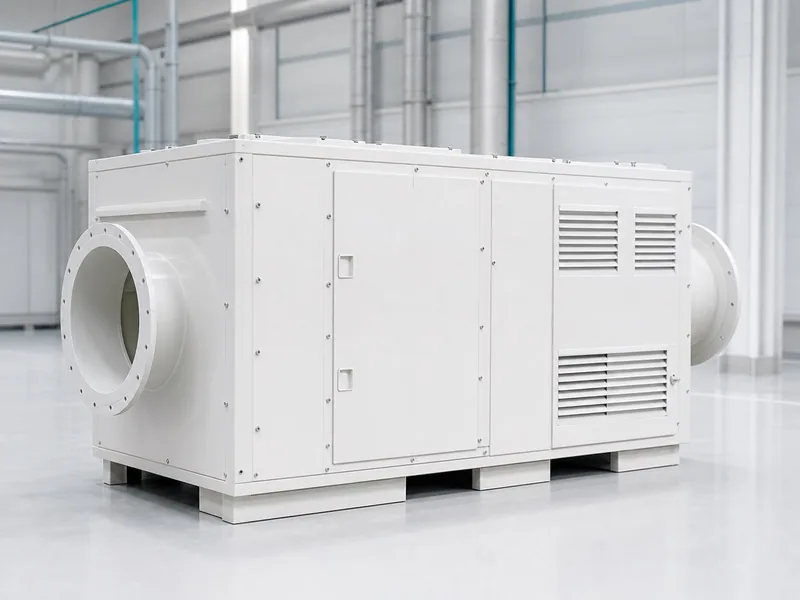
Electrode-based oxidation for odors and specific streams where media replacement is impractical.
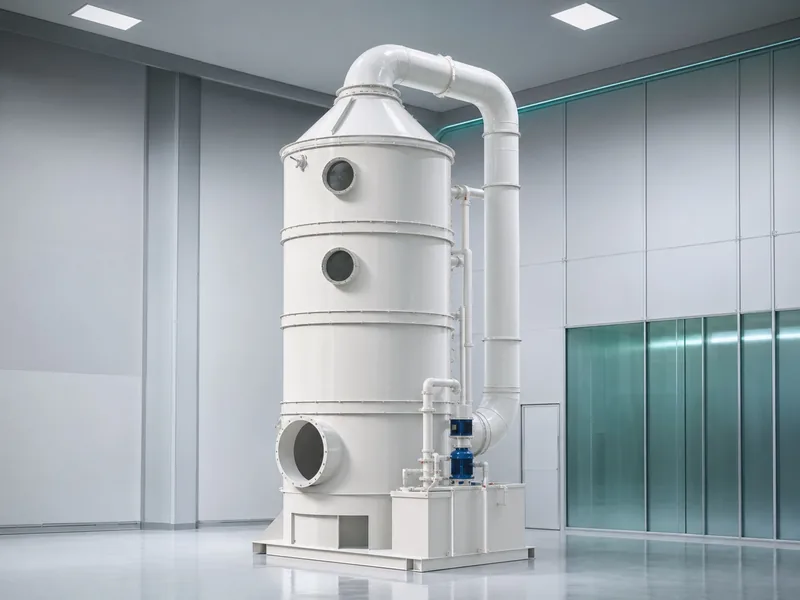
Scrubber + carbon, plasma + carbon, rotor + CO — combinations engineered to hit your stack limit at the lowest lifetime cost.
Honest sizing beats fashionable acronyms. The decision is mostly concentration × operating hours:
Send your stack test or solvent purchase records and we will model the options with payback periods — sometimes the honest answer is the cheaper technology.
Above roughly 1 g/m³ in the concentrated stream, catalytic oxidation runs near-autothermally — electricity for fans and rotor drive dominates. Our proposal includes a kWh/gas estimate at your utility prices so you can compare technologies on lifetime cost.
Yes. Tell us the limit values (mg/m³ or kg/h) your permit demands and we design to them; the guarantee in the contract references your standard, not a generic number.
Skids are pre-piped and pre-wired in the factory, shipped in containers, and reassembled by your contractor with our supervision — remote video or an engineer on site. Commissioning typically takes days, not weeks.
Untreated, yes — mist blinds carbon and rotors. That is why our trains start with PP scrubbers or dry filter boxes we fabricate ourselves; the concentrator only sees clean, dry air.
Airflow, solvents and operating hours are enough to start. You receive a process flow diagram, efficiency and energy estimate, and a factory price within 2–3 working days for full systems.
WhatsApp +86 186 1558 6932 · sales@jhf2017.com
An engineer — not a salesperson — reviews every inquiry and replies within 12 working hours with a solution and factory-direct price.