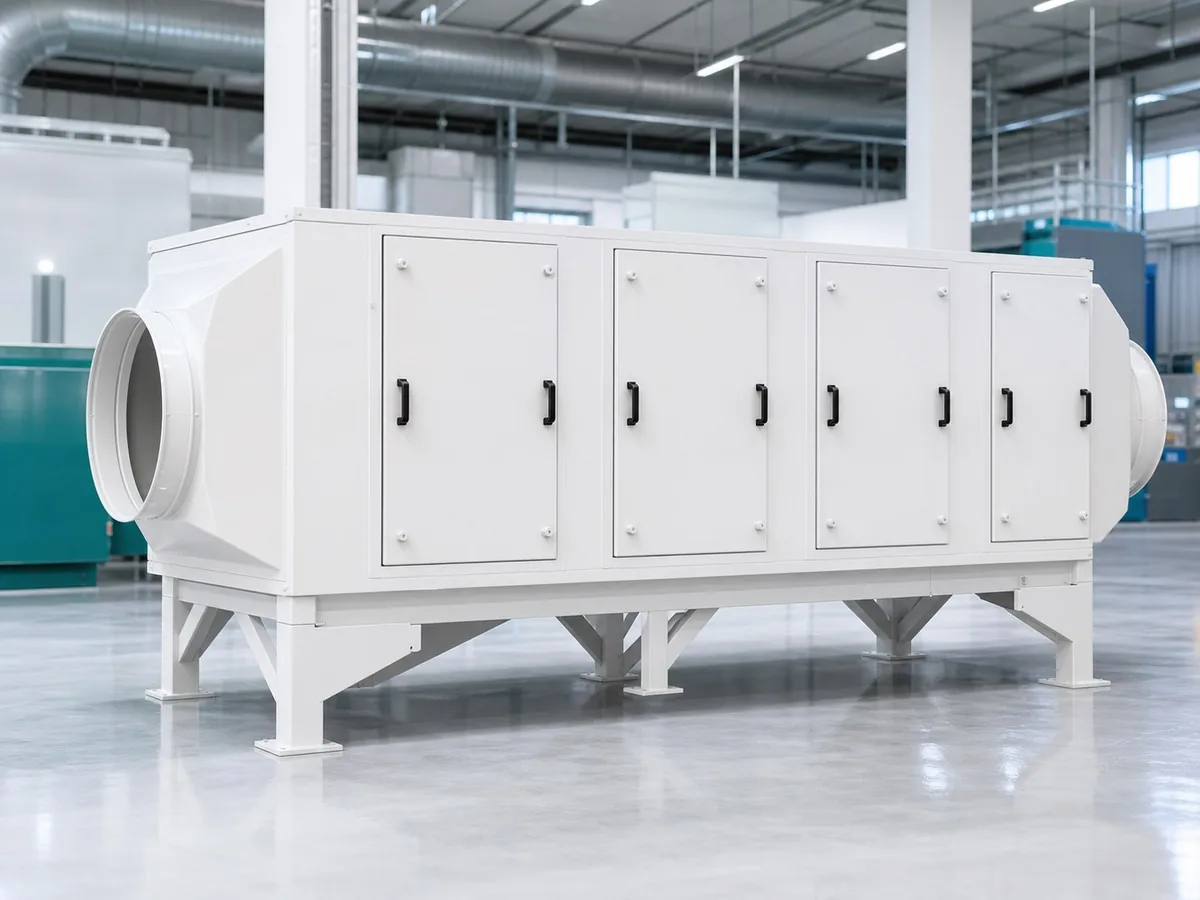
Horizontal Adsorption Box
Inline duct-mounted box with drawer trays — the standard for paint shops, printing and workshop exhaust.
Carbon adsorbers are the simplest reliable answer to VOC and odor emissions: exhaust passes through beds of activated carbon that trap solvents, odors and residual organics before discharge. JHF builds them as horizontal quick-change boxes and vertical towers, in polypropylene, carbon steel or stainless — sized to your airflow and solvent load.
Because we fabricate the housings ourselves and buy carbon in bulk, you get honest bed depth and real carbon weight — the two numbers that decide how long a filter actually lasts.
| Airflow range | 1,000 – 80,000 m³/h per unit (parallel modules beyond) |
| Carbon type | Honeycomb blocks (100×100×100 mm) for low pressure drop, or pellet/granular carbon in trays; coal-based or coconut-shell, iodine value specified per duty |
| Bed velocity | 0.8 – 1.2 m/s honeycomb · ≤ 0.5 m/s pellet beds — stated in every proposal |
| Removal efficiency | 90 – 98% on common solvents (toluene, xylene, ethyl acetate, alcohols) at design load until breakthrough; sizing sheet includes estimated service life per kg carbon |
| Housing material | PP-H 8–12 mm (humid/corrosive), carbon steel epoxy-painted, or SS304/316 |
| Access | Side drawers or hinged doors with EPDM seals; lifting lugs; differential-pressure ports to monitor saturation |
| Pressure drop | 250 – 600 Pa honeycomb · 600 – 1,200 Pa pellet, clean bed |
| Pre-filtration | G4/F5 paint-mist or dust pre-filter section recommended ahead of carbon — available integrated |
| Options | Spark arrestor, temperature probe with alarm, bypass damper, matched fan, catalytic desorption/regeneration skid, spare carbon supply by container |
Values are typical envelopes; each order ships with its own datasheet and carbon change instructions.
Inline duct-mounted box with drawer trays — the standard for paint shops, printing and workshop exhaust.
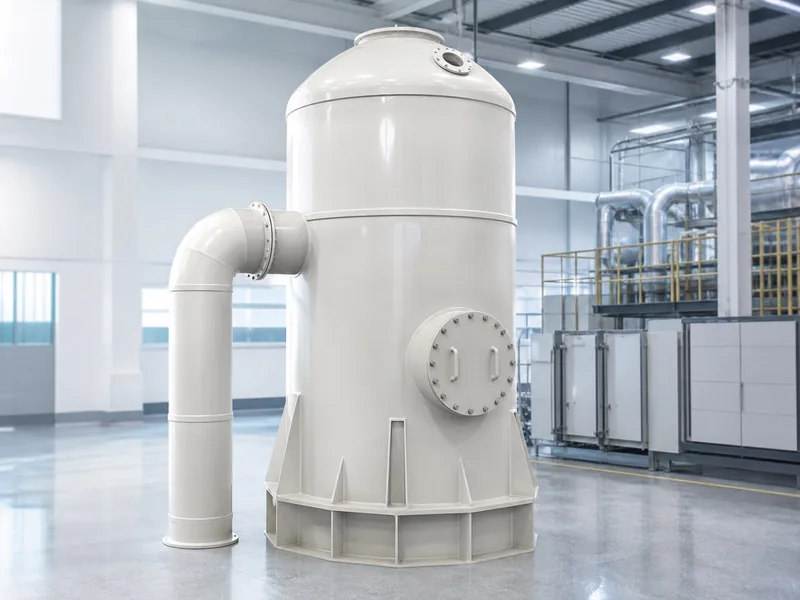
Deep annular or layered beds for odor polishing after scrubbers, pump stations and wastewater works.
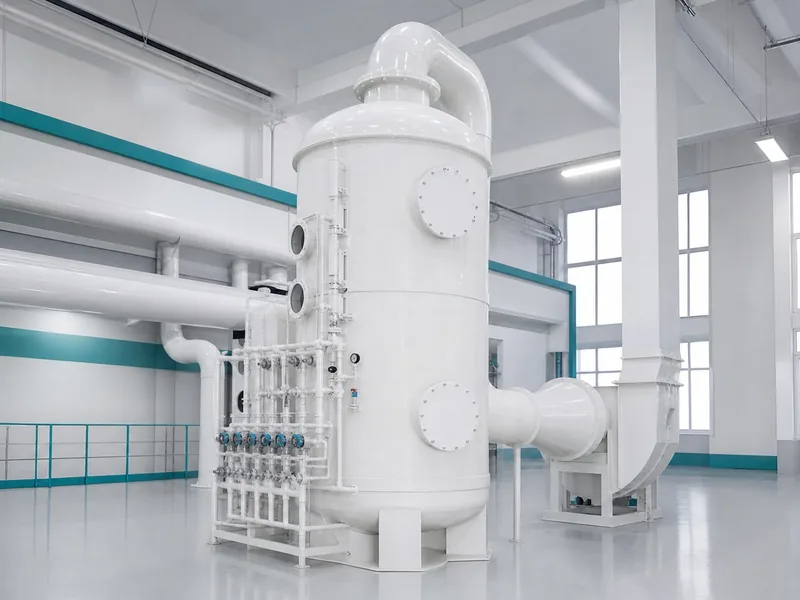
Impregnated carbon or molecular-sieve beds for H₂S, ammonia, mercaptans and other specific gases.
Activated carbon is a consumable: the unit "works" until the beds saturate. A correctly built adsorber is therefore about three things — enough carbon mass for a sensible change interval, low enough bed velocity for real contact time, and housings that make changing carbon painless so it actually gets done.
It depends on solvent load: the sizing sheet we send estimates breakthrough time from your airflow, concentration and operating hours. As a rule of thumb, 1 kg of quality carbon adsorbs 0.2–0.3 kg of solvent before change-out.
Yes — honeycomb blocks and pellet grades, shipped worldwide in cartons or big-bags, including for adsorbers we did not build. Send your tray dimensions and we will match them.
Inline boxes suit dry workshop exhaust ducted at height; towers suit ground-level odor polishing with deeper beds. If you send airflow and a photo of the site, we will recommend one within a day.
With the right accessories, yes: spark arrestor ahead of the beds, temperature probe with alarm in the carbon, grounded steel construction and a bypass damper. We configure these based on your solvent and local code.
Within 12 working hours you receive carbon weight, bed sizing, drawing and factory price. Freight quoted to your port on request.
Prefer chat? WhatsApp +86 186 1558 6932 · sales@jhf2017.com
An engineer — not a salesperson — reviews every inquiry and replies within 12 working hours with a solution and factory-direct price.